
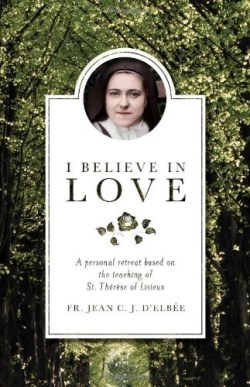
I Believe In Love
This spiritual classic has long been beloved by Catholics for its wondrous distillation of the teaching of St. Therese of Lisieux into a reader-friendly set of meditations. It’s perfect as a personal retreat when you have only a few moments to spare each day – and for spiritual reading anytime and anywhere.
Fr. Jean C. J. d’Elbee, a French priest deeply imbued with St. Therese’s spirit, brings you St. Therese’s teachings on God’s love and the confidence in Him that it should inspire in your soul; humility, peace, and fraternal charity; the apostolate; the Cross; and what it means truly to abandon yourself to Divine Providence.
I Believe in Love has helped countless souls embark on the way to the Father. It will help you focus on Him throughout each day, rest in Him amid your troubles, and live joyfully with Him at every moment!
SKU (ISBN): 9781928832287
ISBN10: 1928832288
Jean D’Elbee
Binding: Trade Paper
Published: October 2001
Publisher: Sophia Institute
Related products
-
Catechism Of The Catholic Church (Revised)
Read moreHere it is – the first new Catechism of the Catholic Church in more than 400 years, a complete summary of what Catholics throughout the world believe in common. The Catechism draws on the Bible, the Mass, the sacraments, Church tradition and teaching, and the lives of the saints. It comes with a complete index, footnotes and cross-references for a fuller understanding of every subject. Using the tradition of explaining what the Church believes, what she celebrates, what she lives and what she prays, the Catechism of the Catholic Chruch offers challenges for believers and answers for all those interested in learning about the mystery of the Catholic faith. Here is a positive, coherent and contemporary map for our spiritual journey toward transformation.
-
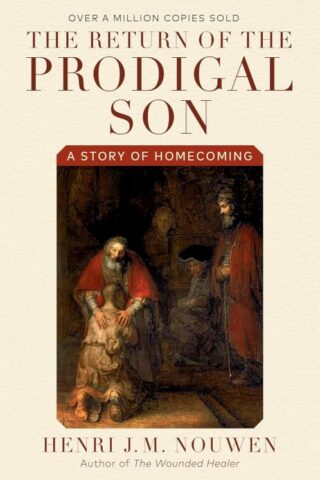
Return Of The Prodigal Son
Read moreA chance encounter with a reproduction of Rembrandt’s The Return of the Prodigal Son catapulted Henri Nouwen on a long spiritual adventure. Here he shares the deeply personal and resonant meditation that led him to discover the place within where God has chosen to dwell.
In seizing the inspiration that came to him through Rembrandt’s depiction of the powerful Gospel story, Henri Nouwen probes the several movements of the parable: the younger son’s return, the father’s restoration of sonship, the elder son’s vengefulness, and the father’s compassion. In his reflection on Rembrandt in light of his own life journey, the author evokes a powerful drama of the parable in a rich, capativating way that is sure to reverberate in the hearts of readers. The themes of homecoming, affirmation, and reconciliation will be newly discovered by all who have known loneliness, dejection, jealousy, or anger. The challenge to love as the father and be loved as the son will be seen as the ultimate revelation of the parable known to Christians throughout time, and here represented with a vigor and power fresh for our times.
For all who ask, “Where has my struggle led me?” or for those “on the road” who have had the courage to embark on the journey but seek the illumination of a known way and safe passage, this work will inspire and guide each time it is read.
-

Choosing Happiness
Read moreIn Choosing Happiness, Lizzie talks about some of these obstacles and how she managed to choose happiness. From fighting with friends to college applications and learning how to live on your own, Lizzie offers her own stories and advice on how to handle whatever life throws at you. With social media and celebrities giving us their own examples of what it means to “grow up” and be successful, Lizzie shows us how it’s sometimes better to stand outside the crowd, even if that means we sometimes have to stand alone.
While it’s easy to give up or give in to social pressure, Lizzie shows us how choosing our happiness is better, and how with faith, prayer, friends, a good attitute–and late-night taco runs–you can overcome anything.
-
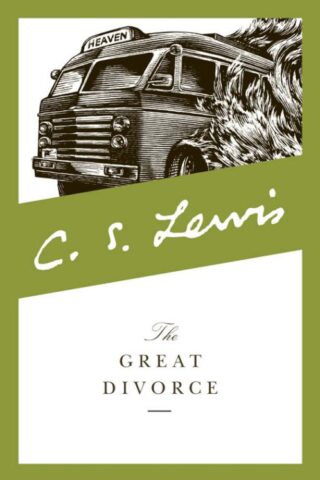
Great Divorce
Read moreC.S. Lewis takes us on a profound journey through both heaven and hell in this engaging allegorical tale. Using his extraordinary descriptive powers, Lewis introduces us to supernatural beings who will change the way we think about good and evil. In The Great Divorce C.S. Lewis again employs his formidable talent for fable and allegory. The writer, in a dream, finds himself in a bus which travels between Hell and Heaven. This is the starting point for an extraordinary meditation upon good and evil which takes issue with William Blake’s The Marriage of Heaven and Hell.
Reviews
There are no reviews yet.