
Essays
Showing all 3 resultsSorted by latest
-
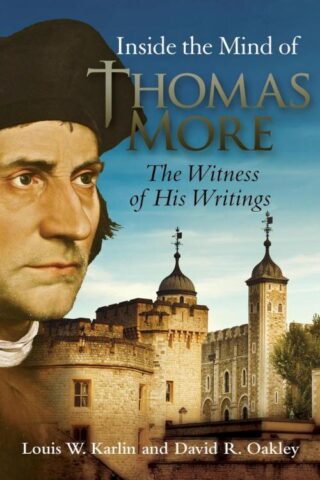
Inside The Mind Of Thomas More
Read moreSt. Thomas More is known primarily for his writing of a satirical work about a perfect society, Utopia, a word whose Greek origin betrays a double meaning: “perfect” and “nowhere.” But this eventual Patron of Statesmen was not finished writing. Once he was imprisoned in the Tower of London, he poured out his soul in a series of spiritual books which have been recorded but not widely read. Now they are once again available in new editions that have appeared in recent years. Drawing on re-translations into modern English of More’s works on the spiritual life, the authors, both lawyers, examine the overwhelming consistency in More’s behavior between his spiritual writings and his heroic resistance to the tyranny of conscience that was being waged against him, as the only significant opponent to the destruction of the Catholic Church by the King of England. This book is an excellent introduction to all of More’s spiritual writings and should lead the reader to the full pursuit of each of them
-
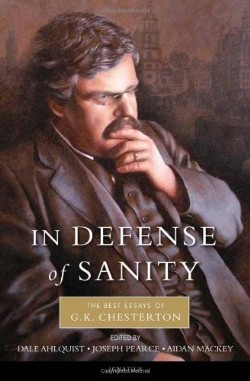
In Defense Of Sanity
Read moreG.K. Chesterton was a master essayist. But reading his essays is not just an exercise in studying a literary form at its finest, it is an encounter with timeless truths that jump off the page as fresh and powerful as the day they were written.
The only problem with Chesterton’s essays is that there are too many of them. Over five thousand! For most GKC readers it is not even possible to know where to start or how to begin to approach them.
So three of the world’s leading authorities on Chesterton – Dale Ahlquist, Joseph Pearce, Aidan Mackey – have joined together to select the “best” Chesterton essays, a collection that will be appreciated by both the newcomer and the seasoned student of this great 20th century man of letters.
The variety of topics are astounding: barbarians, architects, mystics, ghosts, fireworks, rain, juries, gargoyles and much more. Plus a look at Shakespeare, Dickens, Jane Austen, George MacDonald, T.S. Eliot, and the Bible. All in that inimitable, formidable but always quotable style of GKC. Even more astounding than the variety is the continuity of Chesterton’s thought that ties everything together. A veritable feast for the mind and heart.
While some of the essays in this volume may be familiar, many of them are collected here for the first time, making their first appearance in over a century.
-

Bridging The Great Divide
Read morePreface: Cultivators Of A Flourishing Garden Of Life
Building A Bridge Across The Great Divide
The Virtue Of Bi-Polar Extremism
The Trouble With A Beige Catholicism
Paths And Practices: Recovering An Embodied Christianity
Liturgy
Lex Orandi, Lex Vivendi: The Liturgy As A Source For The Moral Life
The Trouble With Beige Churches: A Critique Of The Influence Of Cartesian Modernity On Contemporary
The Liturgical Act And The Church Of The Twenty-first Century
At The Feet Of The Masters
The Christian Humanism Of Karol Wojtyla And Thomas Aquinas
Thomas Aquinas’s Christological Reading Of God And The Creature
God As Artist
Genesis And Joyce: Narratives Of Sin, Grace And Theonomy: An Essay In Honor Of Andrew Greeley On His Seventieth Birthday
Preaching The Message
“I’m Waiting; I’m Waiting”: An Advent Meditation
The Grandfather And The Voice From The Whirlwind: A Meditation On Preaching The Problem Of Suffering
Three Paths Of Holiness
A Sermon For Children Of The Seventies
The Way Of Nonviolence
Thomas Merton’s Metaphysics Of Peace
Creation, Transsubstantiation And The Grain Of The Universe: A Contribution To Stanley Hauerwas’s Ekklesia Project
“Comes A Warrior”: A Christmas Meditation
Priesthood And Ministry
Priest As Bearer Of The Mystery
Priest As Doctor Of The Soul
Mystagogues, World-Transformers And Interpreters Of Tongues: A Reflection On Collaborative Ministry In The Church
Evangelizing The American Culture
Additional Info
Bridging the Great Divide: Musings of a Post-Liberal, Post-Conservative Evangelical Catholic represents a pivotal moment in the life of the Catholic community. As the Church seeks to maintain its unique witness, nurture the faithful, and evangelize, a new generation of American Catholics has emerged. No longer the “next generation,” these new leaders came of age after the Second Vatican Council and, like many others, no longer find compelling the battles between the liberals and conservatives throughout the post-conciliar period.Today’s faithful are searching for an expression of Catholic Christianity that is vibrant, colorful, provocative, counter-cultural, deeply rooted in the tradition, and full of the promise of the Good News. In this timely and prophetic book, Father Robert Barron–himself a member of the younger generation–has minted a new vernacular and blazed a new way that goes bridges the great divide and gives voice to the concerns of post-liberal, post-conservative, evangelical believers.